
Web Inspection and Web Monitoring for Paper, Board and Tissue Production
Procemex is a global supplier of Web Inspection Systems, Web Monitoring Systems, and integrated machine vision solutions for pulp, paper, board, and tissue production.
Modern paper, board, and tissue production requires complete visibility into the web from headbox to reel. Procemex provides an integrated Web Inspection and Web Monitoring platform that combines real-time defect detection, synchronized high-speed monitoring, advanced classification, and smart camera technology into one unified solution.
Designed specifically for the pulp and paper industry, Procemex solutions help mills improve product quality, reduce web breaks, minimize waste, and optimize machine efficiency across the entire production line.
Unlike standalone systems, Procemex combines Web Inspection and Web Monitoring into one synchronized OnePlatform architecture, enabling fast root cause analysis through synchronized defect data and high-speed monitoring video on the same timeline.
From headbox to reel, Procemex technologies are engineered to maintain clear, reliable visibility in demanding paper machine environments, including positions exposed to moisture, dust, heat, and vibration.


On this page
- What is Web Inspection?
- What is Web Monitoring?
- Why Modern Mills Need Integrated Vision Systems
- Key Technical Components
- System Architecture Overview
- ProClean Pinhole Camera Technology
- Defect Classification
- Reporting
- AI Vision Applications
- Services, Lifecycle and Upgrades
- How to Choose the Right System
- Frequently Asked Questions
What is Web Inspection?
Web Inspection is used to automatically detect, classify, and visualize defects on the moving paper, board, or tissue web during production. High-speed smart cameras, optimized illumination geometries, and intelligent software continuously analyze the web surface in real time to identify defects that may impact product quality, converting performance or customer satisfaction.
Modern inspection systems help mills detect coating defects, holes, dirt, streaks, wrinkles, edge cracks, contamination, and other surface abnormalities at full machine speed. Real-time defect information allows operators to react faster, improve process stability, and reduce unnecessary waste.
Procemex Web Inspection solutions are designed specifically for demanding paper industry applications where high machine speeds, varying grades, and harsh environmental conditions require robust and highly accurate inspection technology.
In addition to real-time defect detection, Procemex Web Inspection provides a clear and actionable defect map that helps operators and quality teams understand where defects occur across the web and how they develop during production. Defect map data supports faster decisions, better roll quality management and more accurate root cause analysis when combined with Web Monitoring information and winder stop at defect functionality.
Procemex Web Inspection also supports more efficient winder operations. With Procemex Automatic Winder Target Control (ATC), mills can reject more defects at the winder while maintaining quality control, helping operators optimize production and reduce unnecessary web breaks. This makes Web Inspection not only a quality assurance tool, but also a practical part of process optimization and efficient machine operation.
Real production benefits can be seen at Nippon Dynawave Packaging, where the integrated Procemex OnePlatform system has helped improve winder efficiency, product quality and machine uptime. The mill has also reported excellent experiences with ProClean Pinhole Camera Technology and ATC-supported production optimization.

The system architecture combines
- high-performance smart cameras
- advanced lighting technologies
- optimized measurement geometries
- synchronized defect visualization
- intelligent defect classification
Unlike generic machine vision systems, Procemex solutions are developed for continuous pulp, paper, board, and tissue production environments where reliable operation and precise defect visibility are critical.

Using different measurement geometries in Web Inspection
Different defects require different inspection approaches. In Web Inspection, the choice of measurement geometry has a major impact on how reliably defects can be detected and classified.
Procemex uses different lighting geometries to optimize defect visibility according to the customer’s production process, paper grade and defect types. Different geometries can highlight surface defects, coating variations, holes, wrinkles, oil contamination, and deformation that may not be visible with a single inspection method.
These measurement geometries include technologies such as transmission, reflection, side light, UV oil detection and 3D defect detection.
Patented side light Web Inspection helps identify difficult defects such as wrinkles more reliably by emphasizing surface deformation. UV based oil detection enables reliable identification of oil-related defects that can otherwise be difficult to detect with conventional detection methods.
For demanding applications, 3D defect detection provides additional depth information for defects where height, shape or surface deformation are critical for reliable classification, such as indents, outdents and coating on/off variations.
The optimal measurement geometry combination is typically selected based on customer defect samples and production requirements, ensuring comprehensive and reliable defect detection.
What is Web Monitoring?
Web Monitoring is used to visualize and analyze fast machine and web events during paper, board, pulp, and tissue production. High-speed monitoring systems provide continuous visibility across the machine, helping operators and process experts understand web behavior, identify the origins of disturbances, and perform fast root cause analysis after breaks or process disruptions.
Web Monitoring systems capture synchronized high-speed video from critical machine positions, enabling operators to analyze how the web behaves before, during, and after an event.
Procemex Web Monitoring system provides continuous visibility across the paper machine, from headbox to reel. The system helps mills identify the root causes of web breaks and other production disturbances that may impact production efficiency and product quality.
Reliable monitoring starts with clear, high-quality images. Procemex ProClean Pinhole Camera Technology keeps the camera view clean 24/7, significantly reducing the need for manual cleaning and supporting safer working conditions for operators. With up to 12 MP image quality, ProClean Pinhole Cameras provide a reliable foundation for continuous monitoring even in demanding paper machine positions.

Because paper machines operate at extremely high speeds, many critical events happen too quickly to be seen by the human eye. Synchronized high-speed monitoring video allows operators to replay events frame by frame and understand exactly what happened before, during and after a break or disturbance.
Real production benefits can be seen at FPC Tissue in Chile, where the Procemex Web Monitoring System helped reduce sheet breaks by 60% and increase production efficiency by 30%. The mill also highlighted the sharp image quality and reliable operation of Procemex HD Pinhole Cameras in harsh and dusty tissue machine conditions. Read the FPC Tissue Success Story
Procemex Eco LED Lights are an essential part of this visibility. Their integrated cleaning system keeps the lights clean, helping maintain consistent and efficient illumination over time. Correct and sufficient lighting is critical for producing clear images, especially in demanding environments where moisture, dust, heat and contamination can otherwise compromise monitoring quality.
Procemex also provides IR camera technology for applications where enhanced visibility is required in challenging process conditions, including steam, low visibility and other demanding monitoring positions where conventional imaging may be limited.

The Procemex Web Monitoring System combines
- Synchronized high-speed monitoring video
- Full-machine visibility from headbox to reel
- Fast event replay for root cause analysis
- Intuitive timeline-based analysis
- Frame-by-frame review of events before, during and after a break
- ProClean Pinhole Camera Technology for clean and clear 24/7 visibility
- Up to 12 MP image quality for detailed monitoring
- Eco strobe LED Lights with integrated cleaning for stable and efficient illumination
- Strobed lighting reduces heat generation in LEDs, keeping them cooler and extending their lifetime.
- IR camera technology for steamy, low visibility, and other demanding conditions
- Reliable operation in demanding paper machine environments
- Reduced need for manual camera and light cleaning
- Improved operator safety through less frequent manual cleaning work
- Integration with Web Inspection data and process information
When Web Monitoring and Web Inspection are combined in the same OnePlatform environment, operators can correlate defect information, paper behavior, and break events on the same synchronized timeline. This significantly improves troubleshooting efficiency and enables faster root cause analysis compared to standalone systems.


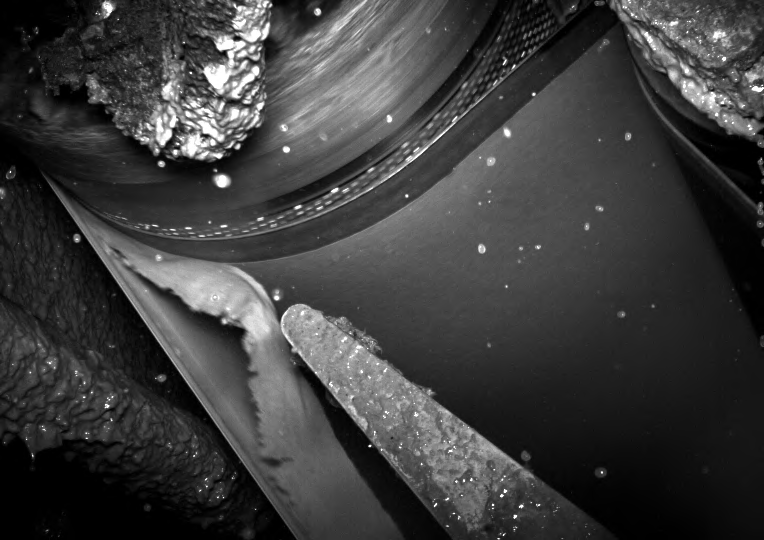
Why Modern Paper & Board Mills Need These Systems
Modern paper and board production leaves very little room for uncertainty. Machines run faster, quality demands are higher, and even short disturbances can lead to waste, lost production time, and customer claims. When a defect, wrinkle, hole, edge crack, or web break occurs, operators need to understand not only what happened, but also where, when, and why it happened.
This is where integrated web monitoring and web inspection systems become essential.

A web inspection system detects, classifies, and locates defects in real time, giving operators clear defect data, high-quality images, and actionable information for quality control. When web inspection is connected with web monitoring, operators can review synchronized camera footage around each defect and investigate the origin of the problem more effectively.
At the same time, web monitoring helps mills analyze web breaks and process disturbances by showing what happened before, during, and after the event. Instead of relying on assumptions or manual investigation, operators can focus troubleshooting on the right area of the machine and reduce reaction time.
The greatest value comes when these two capabilities work together. Procemex OnePlatform combines web monitoring and web inspection into one integrated system, helping mills understand the interrelations between defects and web breaks. This supports faster root cause analysis, improved machine uptime, reduced waste, and more stable production.
For modern mills, this is not only a quality control tool. It is a production efficiency tool. Integrated vision systems help operators make better decisions, maintenance teams respond faster, and production teams prevent recurring problems before they become costly.
Key Technical Components in Web Inspection and Web Monitoring
High-quality web inspection and web monitoring depend on more than camera resolution alone. The best image quality is created by the right combination of smart cameras, powerful LED strobe lighting, high shutter speed, clean and clear camera visibility, and a mechanically stable inspection structure.
Smart Cameras and High Shutter Speed
Procemex smart cameras are designed to capture sharp, high-resolution images from fast-moving paper and board machines. High shutter speed is essential because if the shutter speed is too low, the camera cannot stop the paper web movement properly. This results in motion blur, which makes root cause analysis and defect identification more difficult.

A standard pinhole camera with 1/2,000 sec or lower shutter speed cannot stop paper movement properly, especially in demanding positions. Also, corners of the imaging area are typically dark and fuzzy. Procemex ProClean pinhole camera technology enables 1/8,000 sec shutter speed, helping to freeze the movement of the web and produce clear, evenly illuminated images.
When combined with Procemex ProClean pinhole technology, the system can reach 5–10 times higher shutter speeds compared with standard pinhole lenses. This helps operators see crystal-clear images without blur caused by fast web movement or image distortion and fuzziness in corner areas.

Smart Camera Controlled LED Strobe Lighting
Lighting is a critical part of image quality. Procemex Eco LED Lights are smart camera controlled stainless steel strobe LED lights designed to work together with Procemex pinhole cameras. They can be used in all web monitoring camera positions.
The smart camera automatically controls the strobe lighting to match the camera frame rate. The camera shutter speed also controls the length of each light pulse, meaning that the LED light illuminates the web only when the camera is actually filming. This precise synchronization helps freeze paper movement effectively and supports crystal-clear image quality.
Together with highly light-sensitive sensor technology, Procemex strobe LED lighting enables camera exposure times of 5–20 microseconds, which is extremely important for capturing fast-moving paper webs without motion blur.
Energy-Efficient LED Technology
Procemex Eco LED Lights are also energy efficient. The strobe lighting uses an average of only 30 W, compared with 400–500 W for a standard metal halide light. This significantly reduces heat generation and energy consumption.
The lighting portfolio includes different light types for different camera positions. Procemex Eco LED Wide provides broader light coverage for wider illumination needs, while Procemex Eco LED Spot is designed for precise, targeted illumination in positions where detailed inspection of a specific area is required.
Stable Carbon Fiber Web Inspection Beams
In web inspection, mechanical stability is essential. Procemex Web Inspection camera and light beams are made of carbon fiber, which provides an extremely durable and stable structure for demanding paper and board machine environments.
A stable WIS beam helps keep the camera and lighting geometry fixed, reducing vibration and supporting consistent image quality. This is important because vibration can affect image sharpness, inspection accuracy and long-term system reliability. Carbon fiber also offers high strength without unnecessary structural weight, making it well suited for wide inspection beams and demanding mill conditions.
Glass-Free Web Inspection Beam Design
Another important safety and reliability benefit is that the Procemex Web Inspection light beam has no glass that could break. This matters in production environments where broken glass could create safety risks, contamination risks, or unplanned downtime.
Instead of a fragile glass surface, the Web inspection beam uses protective Teflon film that can be replaced when needed. The replacement is straightforward and can be done with basic hand tools, helping maintenance teams keep the system in optimal condition without complicated service procedures. Procemex also provides an instructional video showing how to replace the protective Teflon film quickly and conveniently.
Combined with the stable carbon fiber beam structure and Procemex’s camera and lighting technology, this design supports long-term reliability, easier maintenance, and safer operation in demanding paper and board machine environments.
Why This Matters
Together, Procemex smart cameras, ProClean technology, synchronized LED strobe lighting, high shutter speeds, and stable carbon fiber Web Inspection beam construction create a reliable foundation for high-quality web inspection and web monitoring. The result is sharper images, less motion blur, stable inspection performance, and fewer weak points in harsh production environments.
This helps mills identify defects and root causes faster, improve runnability, reduce downtime, and support consistent product quality.
System Architecture Overview
Procemex OnePlatform architecture is built around software-adjustable SmartCamera technology, where image data is processed directly inside the Smart Camera. This reduces network load, improves system performance, and enables scalable high-speed Web Inspection and Web Monitoring across the entire production line.
The architecture is designed to simplify system ownership and long-term maintenance. Even large systems with up to 200 cameras can operate with a single server, helping reduce hardware, maintenance, and lifecycle costs. The system also supports easy virtualization and reliable backup solutions, making maintenance and future system management more efficient.
The same SmartCamera technology is used throughout the entire system for Web Inspection, Web Monitoring, and vision applications. Using one common platform makes the system easier to learn, operate, and maintain, while also simplifying spare parts management and upgrades.
Future expansion and modernization have been built into the architecture from the beginning. OnePlatform is designed to be future-proof and backward compatible, allowing mills to expand and upgrade systems over time without replacing the entire infrastructure.
Key architecture benefits
- Image data processed directly inside the Procemex Smart Camera
- Reduced network load and scalable performance
- Single-server architecture even for large camera systems
- Easy virtualization and system backup
- Same SmartCamera technology across the entire system
- Easier operation, training, and maintenance
- Simplified spare parts management
- Future-proof and backward-compatible architecture
- Easy system expansion and modernization
- Integrated OnePlatform environment for Web Inspection, Web Monitoring, and vision applications
Procemex ProClean Pinhole Camera Technology
Keeping monitoring cameras clean is a continuous challenge in paper, board, and tissue production. Dirt, moisture and contamination can quickly reduce image quality, making monitoring less reliable and increasing the need for manual cleaning.
Procemex ProClean Pinhole Cameras are designed to maintain clean and clear visibility 24/7, even in demanding paper machine environments. Instead of a traditional protection window that can become dirty or worn, ProClean uses a dedicated pinhole structure and continuous instrument air flow to prevent water and dirt from entering the camera housing.
The result is reliable, high-quality monitoring with significantly reduced cleaning needs and improved operator safety.
ProClean Pinhole Cameras can be used across the entire machine, from headbox to reel, providing continuous visibility in positions where conventional camera systems may struggle to remain clean.
Read a case story by Dika Akilla showing ProClean Camera images from different machine positions on the installation day and six months later — demonstrating clear and reliable visibility over time.
The technology combines
- Clean and clear 24/7 high-resolution visibility
- Significantly reduced manual cleaning needs
- Improved operator safety
- Up to 12 MP image quality
- Clear images from edge to edge
- High shutter speeds for sharp images of fast-moving paper webs
- Low air consumption
- No moving or wearing parts
- Reliable operation in harsh paper machine environments
ProClean technology also enables uninterrupted monitoring without washing cycles or wiper movements that can create blind times during operation.
Procemex ProClean technology has demonstrated reliable long-term visibility performance in demanding production environments, including installations at Nippon Dynawave Packaging. Read the success story.
Defect Classification
Defect classification helps mills identify and understand different types of defects during production. The Web Inspection System analyzes defect features ranging from simple characteristics such as size and shape to more advanced properties like defect intensity, direction, and profile behavior. This enables the system to separate different defect types more accurately and support more effective quality analysis.
Classification typically begins with basic defect categories such as spots, holes, wrinkles, and streaks, and can then be optimized to align with the mill’s production process and quality requirements.
For demanding applications, Procemex AI Classifier provides advanced classification performance for challenging and business-critical defects. AI models can be trained using customer-specific defect samples, helping mills improve defect recognition accuracy and maintain premium quality standards.
Reporting
Procemex Reporting Engine is a web browser-based reporting solution designed for Web Inspection and Web Monitoring. It enables mills to quickly create, customize, and export well-visualized reports that support production analysis, quality management, and process optimization.
Reports can include reel details, defect maps, defect summaries, formation analysis, ATC reel targets, web breaks and production summaries. Visual elements such as graphs, charts, images, and diagrams help operators and production teams understand process behavior more efficiently and make informed decisions faster.
Because the Reporting Engine is fully integrated into the Procemex OnePlatform environment, inspection and monitoring data can be analyzed together within a single system. Reports are easy to export and share in standard formats such as PDF, Excel, and Word, without requiring external software installation.
AI Vision Applications
Procemex OnePlatform includes a wide range of vision applications designed to improve product quality, process stability, production efficiency, and mill safety across paper, board, and tissue production.
Roll Quality Inspection
Procemex Roll Quality Inspection helps mills ensure that only qualified rolls reach customers. AI-powered inspection analyzes roll surfaces, roll ends, wrapping quality, labels and core conditions in real time. The system can detect defects such as tears, scratches, bumps, damaged wrapping, incorrect labels, and winding defects.
The system stores images, defect classes, and timestamps with roll IDs, supporting customer claim handling, quality assurance, and process improvement. Watch this video to see how the system works: Video Roll Quality Inspection
Rope Condition Monitoring
Broken threading ropes can cause production shutdowns, equipment damage and serious safety risks. Procemex AI-Based Threading Rope Monitoring continuously analyzes rope condition using AI-enhanced monitoring and provides early warnings about rope wear before failures occur.
Operators can monitor rope wear trends, identify weak points automatically, and optimize rope replacement timing during planned shutdowns.
A practical example of AI-Based Threading Rope Monitoring can be seen at Metsä Board Äänekoski, where the system provided early warnings about rope wear several days before failure.
Dry Line Analysis
Procemex Dry Line Analysis helps mills optimize water removal, formation stability, and dry line position during production. Real-time dry line detection supports stable operation and helps operators identify process disturbances before they impact paper quality.
AI-Based Pick-Up Drop Off Analysis
Procemex AI-Based Pick-Up Drop-Off Analysis helps operators detect pick-up and edge drop problems earlier than traditional monitoring systems. AI analyzes synchronized monitoring video in real time and highlights important events automatically, helping operators focus on solving problems instead of manually searching for disturbances.
Service, Upgrades, and System Lifecycle
Procemex supports customers throughout the entire lifecycle of Web Inspection and Web Monitoring systems, from system optimization and preventive maintenance to upgrades, extensions, and long-term development partnerships.

Because paper and board production environments continuously evolve, maintaining system performance, reliability and visibility over time is essential. Regular maintenance, proactive support, and lifecycle services help ensure that inspection and monitoring systems continue to deliver reliable production data, high image quality, and fast root cause analysis year after year.
Procemex service and support capabilities include:
- remote support
- preventive maintenance services
- lifecycle and modernization planning
- service agreements
- system upgrades and extensions
- software updates and cybersecurity
- spare parts and technical support
- training and operational support
Remote service capabilities allow Procemex experts to support mills quickly and efficiently without unnecessary delays, helping reduce downtime and improve troubleshooting efficiency. When fast support is needed, customers can quickly reach experienced Procemex specialists who understand the application and can help resolve issues efficiently before they lead to critical production delays.
The OnePlatform architecture is designed to support long-term lifecycle management. Because the system is future-proof and backward compatible, mills can modernize and expand existing systems over time without replacing the full infrastructure. Existing systems can be extended with new cameras, AI applications, reporting functionalities and additional monitoring or inspection positions as production needs evolve.
Long-term service cooperation also helps mills maintain stable system performance and operational reliability over time, as demonstrated in Procemex customer lifecycle partnerships. Proactive lifecycle management also helps ensure that systems remain aligned with changing production requirements and future digitalization needs.
How to Choose a Web Inspection and Web Monitoring System
Choosing the right Web Inspection and Web Monitoring system is a long-term investment that impacts product quality, machine efficiency, maintenance workload, operational reliability, and future scalability.
While many systems may appear similar at first glance, significant differences exist in architecture, usability, lifecycle management, and the ability to support fast and accurate root cause analysis in real production environments.
One of the most important considerations is whether Web Inspection and Web Monitoring operate as separate systems or as one fully integrated platform. When inspection and monitoring are synchronized within the same environment, operators can connect defect information, monitoring video, and web behavior on the same timeline, enabling significantly faster and more effective root cause analysis.

Practical production benefits can be seen at Paper and Board Mill Varel in Germany, where the integrated Procemex Web Inspection and Web Monitoring system helped substantially reduce unknown web breaks and improve troubleshooting efficiency. The mill highlighted the benefits of synchronized monitoring and inspection, strong image quality, wide image coverage and easy integration into the existing IT environment. The project also supported server virtualization and future system expansion. Read the Paper and Board Mill Varel Success Story
System architecture also has a major impact on lifecycle costs and long-term usability. Procemex OnePlatform is built around SmartCamera technology, where image data is processed directly inside the camera. This reduces network load and enables scalable high-speed performance across the production line.
The same SmartCamera technology is used throughout the system for Web Inspection, Web Monitoring and vision applications. Using one common platform simplifies operator training, maintenance, spare parts management and future upgrades. Even large systems with up to 200 cameras can operate with a single server architecture, supporting easier virtualization, system backup and lower lifecycle costs.
Reliable visibility in demanding machine environments is another critical factor. ProClean Pinhole Cameras provide continuous clear image quality from headbox to reel, helping mills maintain reliable monitoring even in positions where moisture, dust, heat or contamination challenge visibility. Reduced manual cleaning needs also support safer and more efficient operation.
When choosing a Web Inspection System, it is essential to understand what types of defects occur on the production line and what kind of inspection setup is needed to detect and classify them reliably. The best solution is built from the right combination of measurement geometries, lighting technologies, classification logic, and application expertise.
The process often starts with customer defect samples. By analyzing these samples, Procemex can determine the most suitable Web Inspection configuration for the customer’s production process, grade structure, and defect detection requirements.
As an innovative technology leader, Procemex develops advanced and patented solutions for demanding defect detection applications. Customers benefit from technologies such as patented UV oil detection for reliable oil-related defect identification and patented side light Web Inspection, which enables difficult defects such as wrinkles to be detected and classified more accurately.
Lifecycle management and future scalability should also be considered carefully. A future-proof and backward compatible architecture allows mills to modernize and expand systems over time without replacing the full infrastructure. This helps protect long-term investments while supporting future AI applications, process optimization and production development.
When evaluating a system, mills should consider not only current production requirements, but also how well the system supports long-term operational reliability, maintainability and future modernization needs.
Key Questions to Ask When Choosing a System
- Are Web Inspection and Web Monitoring one single system, or do they operate as two different systems?
- Can operators perform accurate and fast synchronized root cause analysis?
- Does the system provide reliable visibility from headbox to reel?
- How well do cameras and lights stay clean in moisture, dust, heat, and contamination?
- Can the system be optimized for customer-specific defect types?
- Does the supplier offer advanced technologies for difficult-to-detect defects?
- Is the system future-proof and backward compatible?
- How easy are upgrades, virtualization and system expansion?
- How much manual cleaning and maintenance is required?
- Is the system easy to learn, maintain and support?
- Can the system support future AI and vision applications?
- What is a realistic lifetime for a system?
Frequently Asked Questions
Looking for more detailed answers about Web Inspection, Web Monitoring, root cause analysis, ProClean cameras, OnePlatform architecture, defect detection technologies, maintenance, AI applications, and lifecycle services?
Explore the full Procemex FAQ page for answers to common technical and operational questions related to paper, board, pulp, and tissue production.